We lead and support initiatives aimed at protecting and restoring critical natural resources.

Solutions That Create Change
Pillar 1: Climate Action & Community Resilience
- Ecosystem Conservation
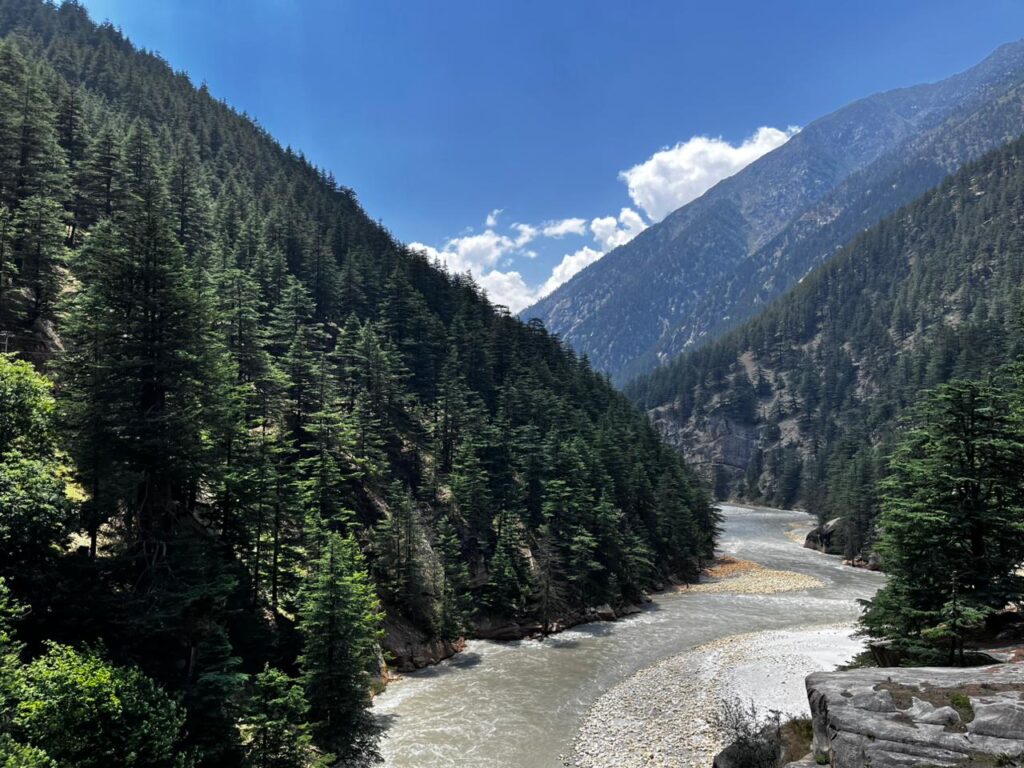
- River Health
Our crowdfunded Water Quality Assessment of the River Suswa in Dehradun provided
crucial data on pollution levels, forming the basis for advocacy and cleanup efforts. We are committed to expanding these assessments to other vital Himalayan rivers. - Forests & Springsheds
We partner with community-led organizations like Aagaas Federation and
Save Kumaon to promote afforestation, combat forest fires, and rejuvenate natural springs, which are the primary source of water for many mountain communities. - Disaster Risk Reduction
We recognize the increasing threat of climate-induced disasters.
- Emergency Response
Our relief work in Dharali, Uttarkashi, where we provided essential supplies to
disaster-affected families, underscores our commitment to being on the ground when communities need it most. - Emergency Preparedness
The lessons learned from our Oxygen Concentrator Manufacturing initiative
during the COVID-19 pandemic have been shared with district authorities to strengthen preparedness for future public health emergencies. - Sustainable Tourism
We collaborate with the hospitality sector, through partners like The Terraces
and Club Mahindra, to promote sustainable practices. Our assessment and certification program for over 310 establishments helps reduce the environmental footprint of tourism, a key economic driver in the region. - Policy Advocacy
We engage with government bodies and institutions like the National Institute of
Urban Affairs (NIUA) to advocate for policies that integrate climate resilience into urban and rural planning.
Pillar 2: Waste Management & Circular Economy
- TURNKEY SOLUTIONS: End-to-End System Design
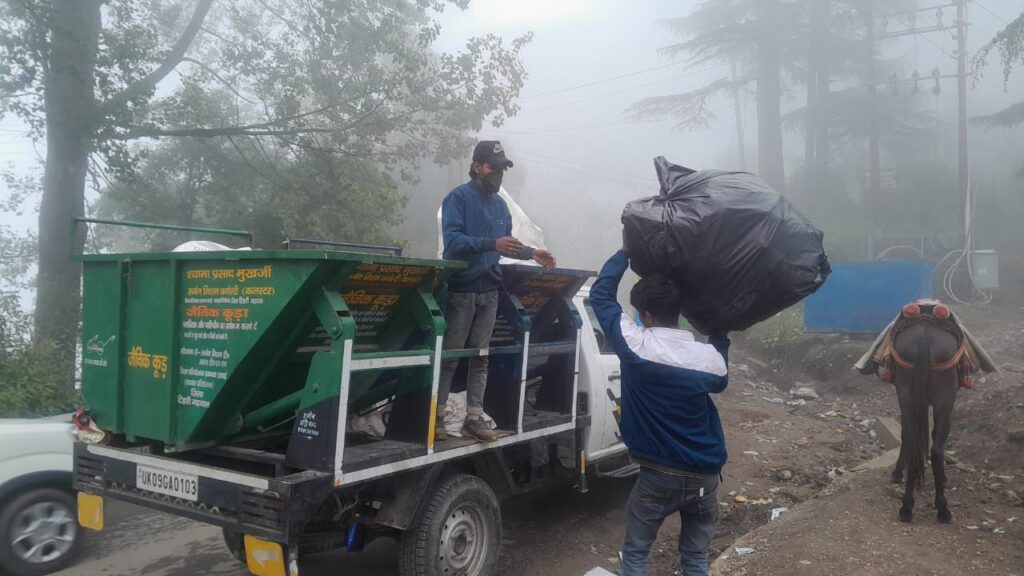
We design and implement complete waste value chains.
- Door-to-Door Collection
Establishing reliable collection systems with dedicated vehicles for
segregated dry and wet waste. - Material Recovery Facilities (MRFs)
Setting up and operating compactor sheds and baling units to
process and sort recyclables efficiently. - Technological Integration
Implementing cutting-edge technologies like the Deposit Return System
(DRS) in partnership with Recykal to incentivize the collection of plastic bottles in high-footfall areas. - Specialized Waste Streams
We address specific, hard-to-manage waste types.
- Plastics & Polyolefins
We are providing consultancy for a 10 TPD Polyolefin Processing Plant in
Rudrapur, creating a high-value offtake for plastic waste. - Textile Waste
We are developing solutions for the traceability and recycling of textile waste, a rapidly
growing environmental concern. - Community Engagement (IEC)
We conduct extensive Information, Education, and Communication (IEC) campaigns, as demonstrated with Hindustan Unilever Foundation, to foster source segregation at
the household and commercial levels, which is critical for the success of any recycling program. - Extended Producer Responsibility (EPR)
We provide end-to-end consultancy for corporations, like Vishvanath Paper Mills, to help them meet their EPR obligations through registration, compliance, and credit management.
Pillar 3: Sustainable Livelihoods
- Green Job Creation
- Waste Workers
We formalize the role of waste workers in our management systems, providing them
with training, safety equipment, and stable incomes. Our operations at the Bhatusain Compactor Shed are a prime example of creating local employment through waste processing. - Conservation Corps
Our ecosystem restoration projects create jobs in activities like tree planting,
nursery management, and eco-tourism. - Women's Empowerment
Women are often the most effective agents of change in their communities.
We place a special focus on their economic empowerment by. - Fostering Micro-Enterprises
Ina Bahuguna’s research on natural-resource-based micro-enterprises
informs our programs that support women in creating products from recycled materials (e.g., textile waste) or sustainably harvested natural resources. - Leadership Roles
We encourage the formation of women-led self-help groups (SHGs) to manage
aspects of our projects, such as community awareness campaigns or decentralized waste collection. - Skill Development and Capacity Building
Technical Training: We provide hands-on training to local youth and community members on waste segregation, composting, recycling processes, and operating machinery.
- Entrepreneurial Skills
We equip aspiring entrepreneurs with the business management skills needed to run successful green enterprises.
Pillar 4: Research, Education & Capacity Building

- Brand Audits
Our brand audit in New Delhi, supported by Lions Services Ltd, was a data-driven
exercise to identify the top corporate plastic polluters. The research paper produced from this audit serves as a powerful advocacy tool to push for greater corporate responsibility. - Environmental Assessments
We conduct scientific assessments, like the River Suswa water quality
analysis, to create an objective baseline for environmental problems and measure the impact of our interventions. - Innovation
Ayush Joshi’s work on developing biomass briquettes from pine needles is a prime
example of research and development aimed at solving the dual challenges of forest fires and energy needs. - Climate & Environmental Education
We believe in nurturing the next generation of environmental leaders.
- School Programs
We develop and deliver educational curricula for schools on topics like waste
segregation, climate change, and biodiversity conservation. - Public Awareness Campaigns
We utilize a variety of media and community events (IEC activities) to raise public awareness and drive behavioral change on a large scale.
- Government Collaboration
Our close working relationship with the Uttarakhand State Government and
District Administrations allows us to provide practical insights that can shape more effective environmental policies and regulations. - Urban Planning
Through our association with the National Institute of Urban Affairs (NIUA), we
contribute to the discourse on building resilient and sustainable cities.
Get In Touch
Our Work, Our Impact, Our Journey Towards A Better Tomorrow